Offering activities to children is more than simply a method to keep them occupied; it is a way to provide them with opportunities for awakening, collaboration, and growth. Their needs, talents, and interests vary as they progress through life. So it is critical to tailor games and activities to their age in order to encourage their interest while respecting their rhythm. From newborns’ initial awkward motions to older children’s huge, creative thoughts, every action serves as a portal to the world. There are several easy and fascinating ideas to use on a daily basis, whether to boost motor skills, promote language, foster creativity, or simply share delicate moments. In this article, we’ll take a look at some suggestions for activities suitable for every stage of childhood, from guiding toddlers through their first discoveries to young explorers bursting with energy.
Awakening To Touch: Safe Sensory Activities For Toddlers
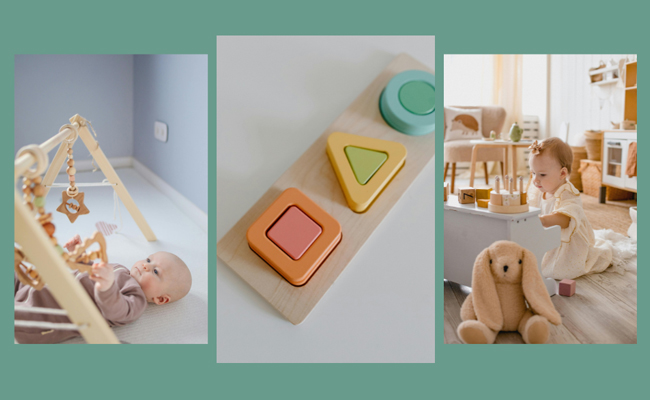
Babies begin to explore the environment with their hands, and frequently with their lips, as early as the first months. At this age, their sense of touch is still growing. As a result, it is critical to provide children with basic yet safe tactile games, while avoiding tiny items or materials that they may ingest. The goal is to pique their interest while providing risk-free exploration.
Here are a few ideas for gentle sensory activities suited to this age group:
Fabrics with different textures: provide huge squares of cotton, velvet, or fleece fabric for youngsters to touch, crumple up, or brush against their skin. You may also create a little tactile book by sewing multiple materials together.
Multi-textured learning mats: These colourful mats made for newborns have a variety of locations to explore, such as smooth, soft, or rustling surfaces, miniature unbreakable mirrors, woven ribbons, and more. They improve motor abilities and activate the senses.
Well-secured sensory bottles: filled with coloured water, glitter or large floating objects, they attract the attention of toddlers. All you need to do is close the cap tightly with strong glue or adhesive tape to prevent it opening.
Textured plush toys or rattles: Select age-appropriate toys with contrasting textures (soft, smooth, rough) that are securely sewed together. Some rattles use softness and light sounds (crumpled paper, bells) to activate several senses at once.
Label cuddly toys: highly popular with newborns, they frequently come with small coloured ribbons to manipulate with the fingers. These things are generally well-sewn and offer soothing tactile stimulation.
Adult supervision is required for all of these activities. To promote proper hygiene, toys should be checked on a regular basis and made of washable materials.
Imagining, Creating, Moving: Activities For The First Big Discoveries
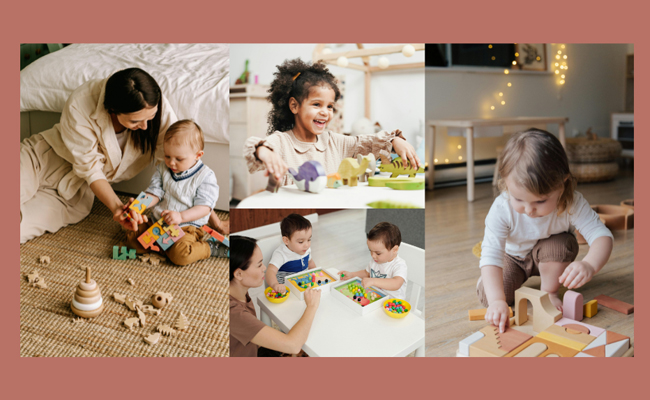
From the time they are babies until they start school, kids improve their language, movement skills, and desire to express themselves. They begin to make up tales, ask questions, mimic adult gestures, and desire to ‘do things themselves’. At this stage of their development, the activities available might include a combination of creativity, symbolic play, and global discovery.
Here are a few ideas to help them blossom:
Imitation games: Children like imitating adults. A tea set, a doctor’s kit, a cash register, or a miniature kitchen can be used to simulate everyday scenarios while improving language and social skills.
Clay modelling and manual activities, such as handling, rolling, flattening, and cutting clay, help to develop fine motor skills. Collage may also be used to make little works of art using coloured paper, stickers, and stamps.
Nursery rhymes and brief choreographies: dancing to the rhythm of simple tunes improves coordination and body expressiveness. You may also create a dance or fun movement routine together.
Puzzles and association games: tailored to their level, these games aid in the development of focus, logic, and shape/color identification. A genuine time of peace and introspection.
Planting a seed in a tiny pot, observing insects in the yard, or creating a watering can out of a perforated bottle are all examples of early nature projects. This form of exercise puts children closer to living things and sparks their curiosity about the world around them.
At this age, children want to experiment freely while remaining in a safe atmosphere. Activities can be offered, but it is also crucial to allow kids creativity and free play. Above all, accompanying a youngster on his journey of discovery requires time, attention, and a little mild crazy.
Curious Minds And Creative Hearts
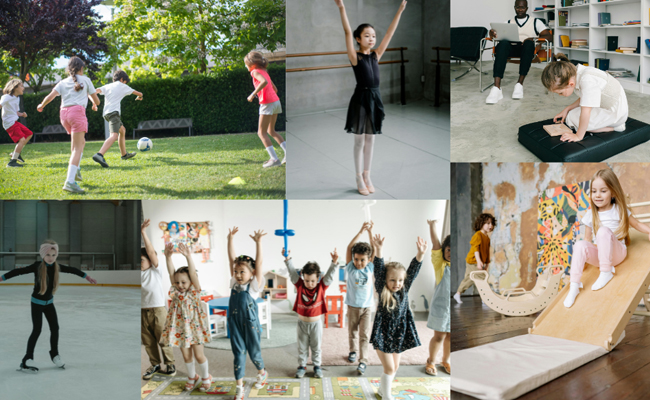
As they grow up, children become more independent, more confident and more able to concentrate. They ask more and more questions, enjoy taking on challenges, creating objects and understanding how things work. This is an ideal time to offer them more structured activities, while leaving plenty of room for their imagination.
Here are a few ideas to feed their thirst for discovery:
Colouring becomes more exact, and youngsters may now experiment with crafts like simple origami, decoupage, brush painting, and clay modelling. They can also create cards, masks, and little ornamental things.
Appropriate board games: At this age, children begin to understand basic rules and enjoy playing board games. These shared experiences help kids improve their observation skills, patience, rule-following, and, in some cases, strategy!
The first scientific activities are quite basic, such as growing a bean, making a volcano with bicarbonate of soda and vinegar, or watching ice melt, that pique their interest in a pleasant way.
Adult culinary activities like creating biscuits, decorating cakes, and making fruit skewers are fun and assist to improve motor skills, taste, and coordination. Moreover, they promote accountability.
Physical activities and sports, such as dance, jogging, and cycling, assist to channel energy while improving balance, coordination, and body awareness.
At this period, children need to be supported, cherished, and occasionally assisted in managing their emotions. The activities available are excellent chances for children to learn while also developing self-confidence and enjoying doing things ‘like grown-ups’ at their own speed.
You Are Now Equipped !
Every kid develops at their own speed, but they all have the same need to explore, play, and express themselves. By providing simple activities tailored to their age and interests, we can foster their growth while providing beautiful moments of sharing. Sometimes the most basic acts create the most lovely memories.