Mauritius has traditionally relied on imported fossil fuels to meet its energy needs. This dependence has made the island vulnerable to global fuel price changes and has posed environmental challenges. In recent years, the country has embarked on an ambitious journey towards energy independence, with solar power playing a central role.
The island enjoys abundant sunshine throughout the year, making it ideal for solar energy. Recognising this potential, the government introduced strategies to increase the share of renewable energy in the national electricity supply. The Renewable Energy Roadmap 2030 sets clear targets, aiming for sixty percent of electricity to come from renewable sources by 2030. These measures are part of a wider plan to reduce reliance on imported coal and fuel, while promoting a greener economy.
One of the most visible initiatives is the Home Solar Project. Managed by the Central Electricity Board, this project installs solar panels on the rooftops of households, particularly in social housing. By 2024, approximately 2,000 homes had received solar panels, enabling families to reduce their electricity bills and lower carbon emissions.
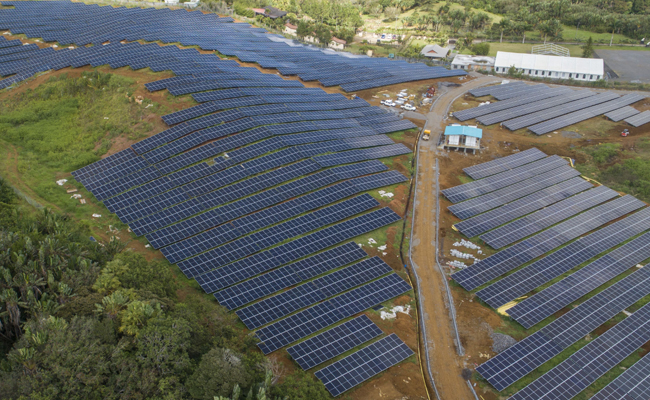
At a larger scale, the Arsenal solar power plant represents a significant milestone. Opened in 2024, this plant supplies clean energy to thousands of households. It forms part of Mauritius’s broader plan to develop utility-scale solar projects capable of contributing significantly to the national electricity grid.
Private companies are also supporting this transition. Programs such as STOR’SUN combine solar panels with battery storage, providing a reliable supply of electricity even when the sun is not shining. These hybrid systems help Mauritius overcome the intermittency challenges of solar power and ensure a steady flow of energy across the island.
Government support is strengthened by the Mauritius Renewable Energy Agency, which promotes innovation in solar technology, energy storage, and new solutions such as floating solar farms and green hydrogen. By combining small-scale rooftop systems with larger solar parks, Mauritius is creating a more resilient and sustainable energy system.
Mauritius’s solar journey is more than a technical change. It is a strategic effort to shield the island from global fuel price fluctuations, reduce environmental impact, and move towards energy independence. By investing in solar power, storage, and technological innovation, Mauritius is building a greener, more self-reliant future for its citizens.